What is vulnerability management

What is vulnerability management? Learn how it helps organizations find, prioritize, fix, and monitor security weaknesses across systems, apps, and cloud environments.
On this page
Modern organizations rely on connected systems, cloud platforms, applications, APIs, devices, and third-party tools to run daily operations. Every one of these assets can contain weaknesses that attackers may use to gain access, steal data, disrupt services, or move deeper into a network. Vulnerability management is the structured process that helps businesses identify these weaknesses before they become real security incidents.
A strong vulnerability management program does more than run occasional scans. It creates a continuous cycle of discovery, analysis, prioritization, remediation, validation, and reporting. This helps security teams understand where the organization is exposed, which issues matter most, and what steps should be taken to reduce risk. In a threat environment where new vulnerabilities appear constantly, this ongoing approach is essential for protecting data, maintaining trust, and keeping critical systems available.
What is vulnerability management?
So, what is vulnerability management? It is the ongoing process of finding, evaluating, prioritizing, and fixing security weaknesses across an organization’s technology environment. These weaknesses may exist in operating systems, software applications, databases, cloud workloads, network devices, containers, web services, or endpoint devices.
A vulnerability can be a missing security patch, a misconfigured cloud storage bucket, outdated software, weak access controls, exposed credentials, insecure code, or an unprotected service connected to the internet. Some vulnerabilities are low risk and difficult to exploit, while others may give attackers a direct path into sensitive systems. Vulnerability management helps organizations separate urgent risks from less critical issues.
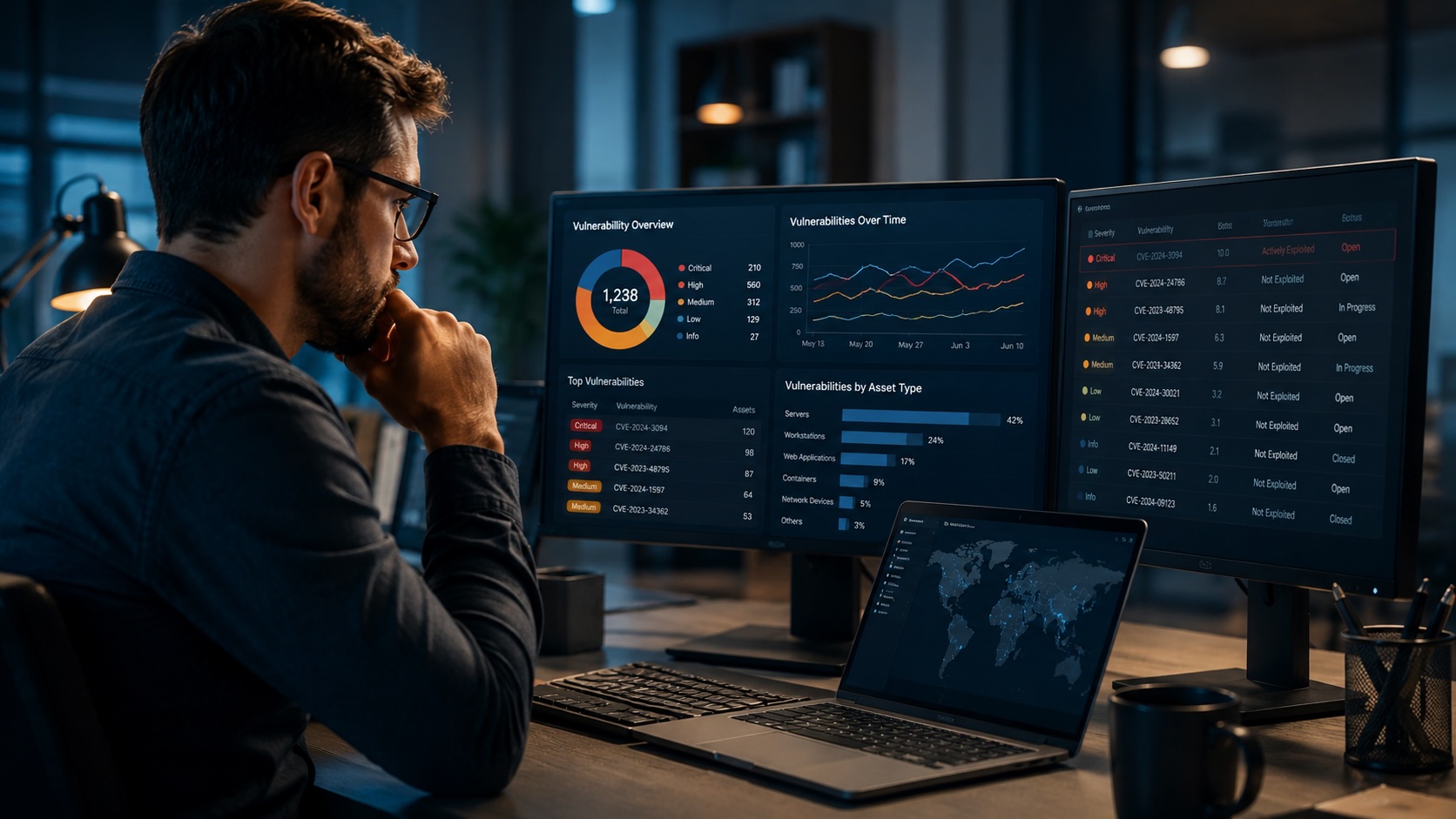
The process usually starts with asset visibility. A company cannot protect what it does not know exists. Security teams need to identify servers, laptops, cloud resources, applications, containers, APIs, and other assets that may contain security gaps. Once assets are discovered, vulnerability scanning tools and security assessments are used to detect known weaknesses.
After vulnerabilities are found, they must be evaluated. This includes understanding the severity of the issue, whether it is actively being exploited, how important the affected asset is, and what damage could occur if the weakness were used in an attack. The goal is not simply to create a long list of problems. The goal is to decide which issues need immediate attention and which can be handled later.
Remediation may involve applying patches, changing configurations, updating software, removing unused services, strengthening access controls, or rewriting insecure code. After fixes are applied, teams should validate that the vulnerability has actually been resolved. This makes vulnerability management a practical risk reduction process rather than a one-time technical exercise.
Why vulnerability management matters
Vulnerability management matters because it helps organizations reduce exposure before attackers take advantage of known weaknesses. Many cyberattacks do not require highly advanced techniques. Attackers often exploit unpatched software, misconfigured systems, weak credentials, or publicly known vulnerabilities that organizations failed to fix in time.
A mature vulnerability management program gives security teams better control over these gaps. Instead of reacting only after an incident, the organization can proactively identify and reduce risk. This shortens the window of opportunity for attackers and lowers the chance of data breaches, ransomware infections, service disruptions, and unauthorized access.
Faster remediation is another major benefit. Without a defined process, vulnerabilities may be discovered but not fixed quickly. Reports can sit in dashboards, tickets may lack owners, and teams may disagree about priorities. Vulnerability management creates structure by assigning responsibility, setting timelines, and tracking progress. This helps IT, security, DevOps, and cloud teams work together more effectively.

It also supports compliance. Many regulations and security frameworks require organizations to identify, assess, and remediate vulnerabilities. Regular scanning, documented remediation, and clear reporting can help demonstrate that the organization is taking reasonable steps to protect systems and data. While compliance alone does not guarantee security, vulnerability management provides evidence of ongoing risk control.
Business continuity is another important reason to invest in this process. A single exploited vulnerability can lead to downtime, lost revenue, customer dissatisfaction, legal issues, and reputational damage. By reducing the number of exploitable weaknesses, organizations improve the resilience of their systems and decrease the likelihood of operational disruption.
Finally, vulnerability management gives leaders a clearer view of security posture. Executives and managers need more than technical scan results. They need to understand trends, risk levels, remediation performance, and business impact. Good reporting turns vulnerability data into useful insight, helping leadership make better decisions about resources, priorities, and security investments.
The vulnerability management lifecycle
Understanding what is vulnerability management lifecycle helps explain how the process works from start to finish. The vulnerability management lifecycle is a repeatable sequence of steps that allows organizations to continuously discover, assess, fix, and monitor weaknesses.
The first stage is asset discovery. This means identifying the systems, applications, cloud services, databases, endpoints, and network components that belong to the organization. Discovery should be continuous because environments change often. New cloud instances, applications, containers, and devices can appear quickly, especially in fast-moving teams.
The second stage is vulnerability scanning and detection. Security tools scan assets for known vulnerabilities, missing patches, configuration issues, outdated software versions, and other weaknesses. Scanning may include internal networks, external-facing systems, web applications, cloud environments, and code repositories. Some organizations also use penetration testing, threat intelligence, and manual assessments to find deeper or more complex issues.
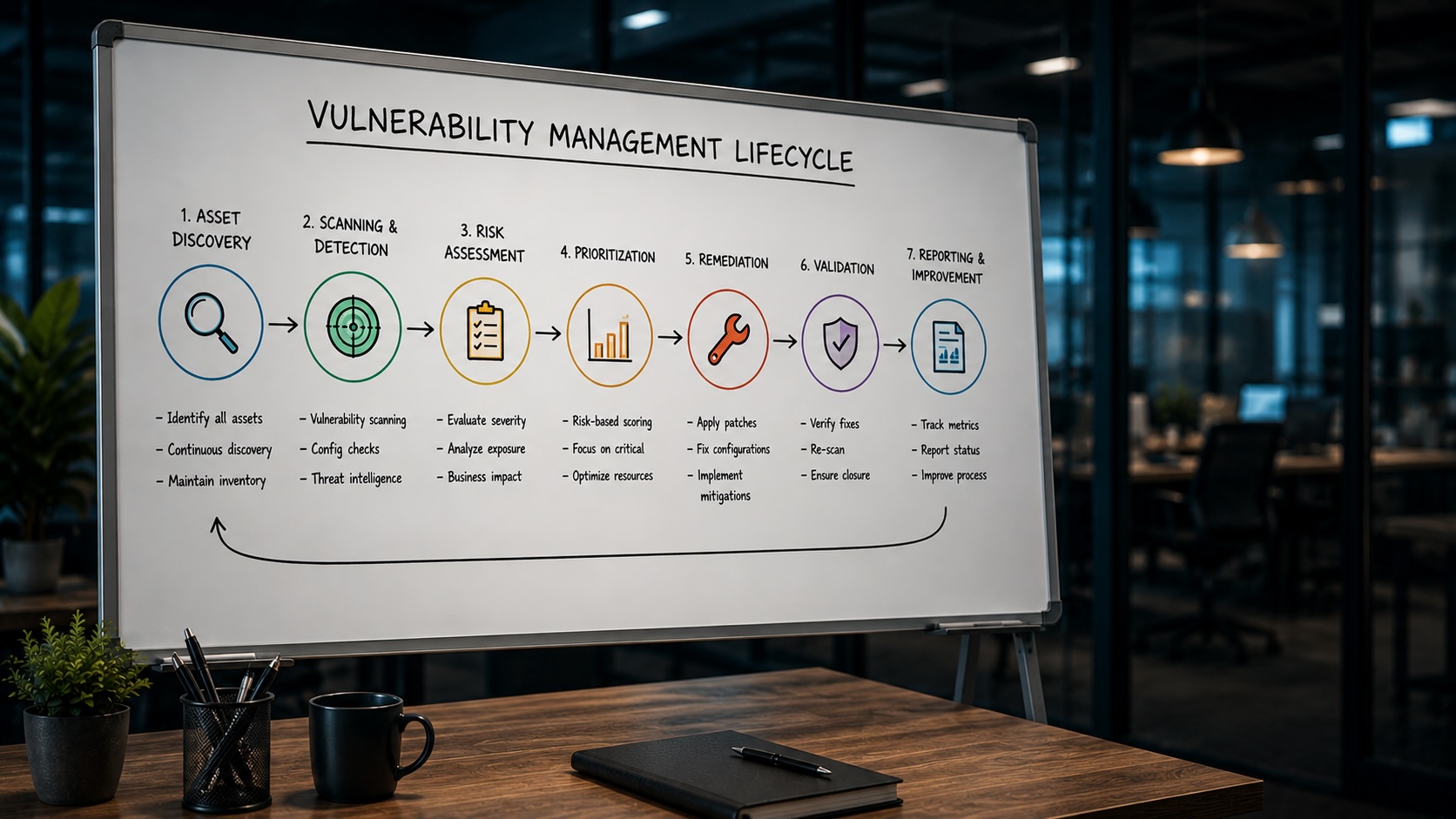
The third stage is risk assessment. Not every vulnerability creates the same level of danger. A critical issue on an internet-facing server that stores customer data is much more urgent than a low-severity issue on an isolated test machine. Risk assessment considers technical severity, exploit availability, asset importance, exposure, business impact, and whether attackers are actively targeting the vulnerability.
The fourth stage is prioritization. Since most organizations cannot fix every issue immediately, they must decide what comes first. Risk-based prioritization helps teams focus on vulnerabilities that are most likely to be exploited and most likely to cause harm. This makes remediation more efficient and prevents teams from wasting time on low-impact issues while serious risks remain open.
The fifth stage is remediation. This is where the organization takes action to reduce or eliminate the vulnerability. Common remediation steps include patching software, disabling vulnerable services, changing insecure settings, updating libraries, rotating credentials, applying firewall rules, or improving access controls. In some cases, a full fix may not be immediately possible, so teams may apply temporary mitigations to reduce risk.
The sixth stage is validation. After remediation, security teams need to confirm that the issue has been resolved. This may involve rescanning the asset, reviewing configuration changes, testing the application, or confirming that the affected software version has been updated. Validation prevents false confidence and ensures that fixes were applied correctly.
The final stage is reporting and improvement. Reports should show open vulnerabilities, remediation progress, risk trends, recurring issues, and performance against internal targets. These insights help teams improve processes, identify weak areas, and communicate security posture to leadership. Because new vulnerabilities appear constantly, the lifecycle repeats continuously.
Vulnerability management best practices
Effective vulnerability management solutions combine technology, process, and accountability. Tools are important, but they are only part of the program. Organizations also need clear ownership, consistent workflows, and regular review.
One best practice is continuous scanning. Annual or quarterly scans are no longer enough for most environments. Cloud infrastructure, applications, and endpoints change frequently, so security teams need ongoing visibility. Continuous scanning helps detect new weaknesses quickly and keeps asset inventories more accurate.
Continuous monitoring is particularly important for online gaming and esports services, where game patches, anti-cheat updates, server changes, and third-party integrations can alter the technology stack quickly. Teams tracking these developments can use industry resources such as GoRanked news alongside vendor security bulletins and technical advisories.
Risk-based prioritization is equally important. Traditional severity scores are useful, but they should not be the only factor. Teams should also consider whether a vulnerability is exposed to the internet, whether exploit code exists, whether attackers are actively using it, and how critical the affected asset is to the business. This approach helps organizations fix the most dangerous issues first.

Clear ownership is another key practice. Every vulnerability should have a responsible team or person assigned to it. Without ownership, remediation can stall. Security teams may identify risks, but IT, engineering, DevOps, or cloud teams often need to implement the fix. Defined roles and workflows make collaboration smoother.
Patching should be timely and organized. Organizations need a patch management process that includes testing, deployment, rollback planning, and emergency procedures for critical vulnerabilities. Delayed patching is one of the most common reasons known vulnerabilities remain exploitable.
Automation can also improve results. Automated asset discovery, scanning, ticket creation, prioritization, and reporting reduce manual work and help teams respond faster. Automation is especially useful in large or dynamic environments where manual tracking becomes unreliable.
Reporting should be practical and audience-specific. Technical teams need detailed vulnerability data, affected assets, and remediation guidance. Managers need trends, risk levels, ownership, and progress. Executives need clear business context, such as exposure reduction and high-risk areas. Good reporting makes vulnerability management easier to understand and support.
Regular reviews help keep the program effective. Teams should review recurring vulnerabilities, missed remediation deadlines, scan coverage, false positives, and process bottlenecks. These reviews can reveal systemic issues such as outdated software standards, poor configuration practices, or lack of asset visibility.
Ultimately, vulnerability management is not just a security task. It is a business risk management function. By continuously finding, prioritizing, fixing, and verifying weaknesses, organizations can reduce attack opportunities, protect critical assets, and build a stronger security foundation.
Articles by this author