Nvidia, Tech Firms Launch Open Secure AI Alliance
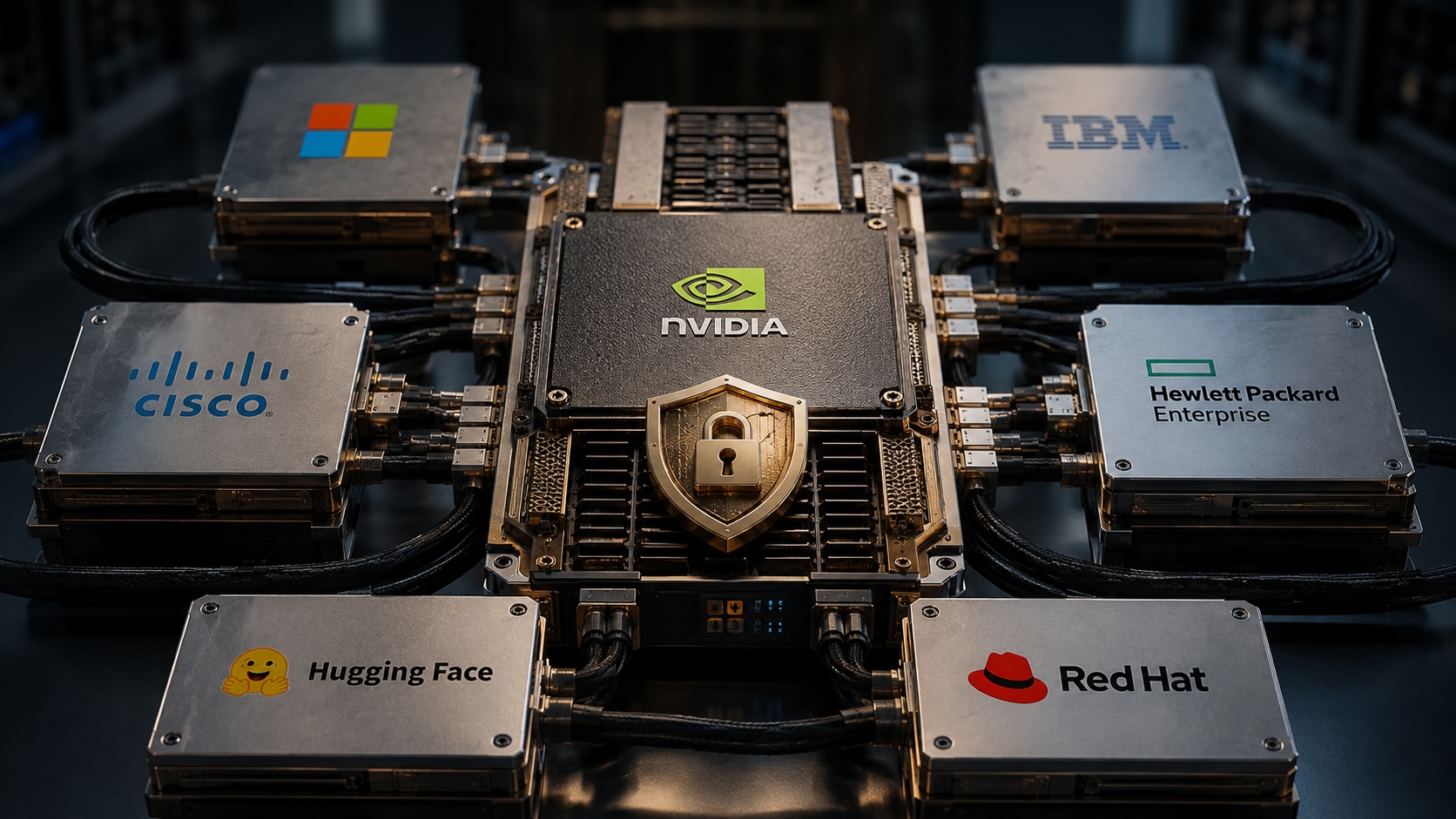
Nvidia and more than two dozen tech, cybersecurity and software firms formed the Open Secure AI Alliance to build and share open-source tools, models and techniques to secure AI systems.
Nvidia and a coalition of technology, cybersecurity and enterprise software companies announced on Monday the Open Secure AI Alliance, a collaborative effort to develop and share open-source tools, model weights, datasets and testing techniques to secure AI systems and autonomous agents.
The alliance builds on work from the Linux Foundation’s Akrites initiative and the OpenSSF community. Inaugural partners include Adobe, Microsoft, IBM, Red Hat, Hugging Face, SpaceXAI, CrowdStrike, Palo Alto Networks, Cisco, Databricks, Salesforce, SAP, Snowflake, HPE and more than two dozen other firms across chips, cloud and security.
Members will pool code, model weights, data and best practices to create reusable security components, testing harnesses and identity frameworks for AI deployments. The group intends to provide tools that allow defenders to test, audit and remediate vulnerabilities at scale.
Nvidia is contributing open models, weights, datasets and research on agent harnesses and released an open-source project called NOOA to help trace, test and audit agent behavior. HPE is contributing work on SPIFFE/SPIRE, a zero-trust identity framework to cryptographically verify agents and services. Hugging Face committed its Safetensors model weight format to the PyTorch Foundation to support safer model distribution.
IBM and Red Hat will extend the Lightwell project to deliver automated vulnerability remediation across open-source supply chains. Microsoft provided MDASH, a multi-model scanning harness that coordinates AI agents to find, debate and validate exploitable software bugs. SpaceXAI plans to open-source Grok Build, a terminal-based AI coding agent, and later the Grok model weights.
Organizers framed the shared resources as defensive tools and warned that broad restrictions on open frontier AI could reduce collective cyber defense capacity. Nvidia wrote that defenders need both closed frontier models and open models so teams can choose tools that balance transparency and security.
The alliance pointed to a recent security incident involving OpenAI and Hugging Face. When closed tools limited forensic work, Hugging Face used the open-weight GLM 5.2 model on its systems to review more than 17,000 actions and help contain the breach.
Planned focus areas include tracing and testing agent behavior, identity verification for services, automated vulnerability fixes and standards for safe model sharing. Organizers expect the work to help enterprises, cloud providers and security teams inspect, validate and patch AI systems without recreating core security capabilities.
The Open Secure AI Alliance joins multiple industry and open-source efforts focused on hardening AI supply chains and operational deployments. Organizers added that pooling contributions from chipmakers, cloud vendors, cybersecurity firms and research groups should accelerate adoption of interoperable security practices for models and the agent frameworks that run them.
Articles by this author