What Is Data Encryption in Transit

Every day, information moves between browsers, mobile apps, cloud platforms, and company servers. Logins, payments, API requests, or file uploads travel across multiple networks before reaching its destination. Without encrypted connections, that traffic becomes an easy target for interception. Here’s how encryption protects data while it’s on the move.
On this page
Opening a website, sending an email, uploading a document to cloud storage, or syncing a mobile app all involve information moving between devices and servers. Most of these exchanges happen in seconds, so it’s easy to forget that the data often passes through networks you don’t control.
If those connections aren’t protected, attackers don’t have to compromise a database to steal information. Capturing traffic as it moves across the network can be enough to expose passwords, payment details, authentication tokens, or confidential business data.
Today, encrypting traffic is a basic security requirement for almost every online service.
What Is Encryption in Transit
Think about what happens when you sign in to an online service. Your browser sends credentials to a remote server, the server verifies them, and the response comes back almost instantly. The same process happens when an application calls an API, an employee transfers files between offices, or two cloud services exchange information.
What is data encryption in transit? It protects information while it’s moving between systems, preventing anyone who intercepts the traffic from reading its contents. Instead of transmitting readable content, both sides communicate through an encrypted channel, making intercepted traffic useless to anyone without the required cryptographic keys.
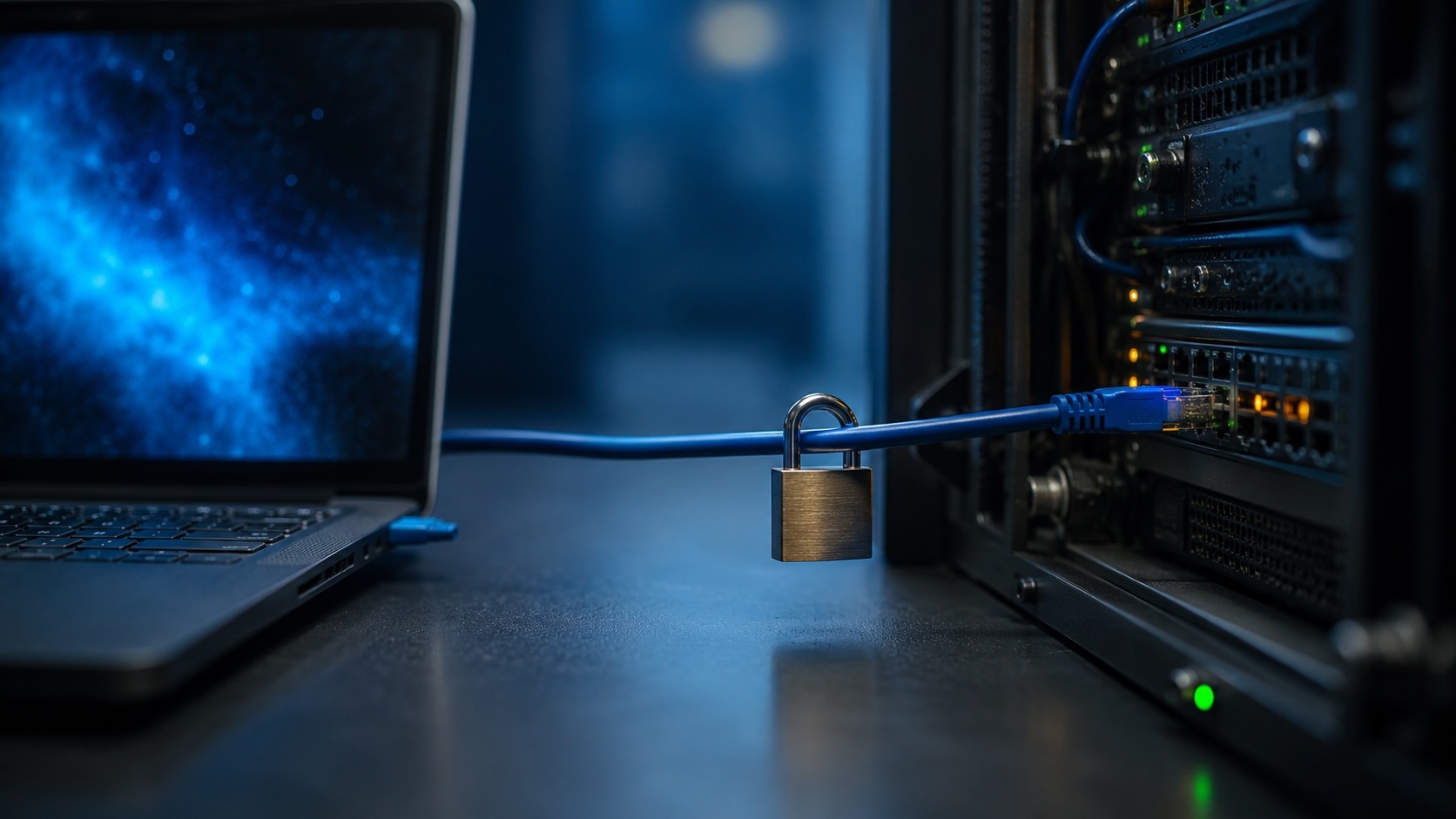
Security documentation often refers to this information as data in motion. The term covers everything actively moving between users, devices, applications, servers, and cloud platforms. Unlike stored information, moving data is exposed every time it crosses the internet, a corporate network, or even public Wi-Fi.
Encryption in transit is used across everyday online services, including:
- browser sessions over HTTPS;
- emails sent between mail servers;
- API requests between applications;
- file transfers across internal or cloud infrastructure;
- communication between connected devices and online services.
Most modern systems establish secure communication through Transport Layer Security (TLS). Before any sensitive information is exchanged, the client and server perform a handshake to agree on the encryption methods they’ll use for that session.
TLS also relies on digital certificates issued by trusted certificate authorities (CAs). These certificates allow browsers, applications, and other clients to verify they’re connecting to the legitimate server instead of an attacker pretending to be one. Once the identity check is complete, temporary session keys are generated to encrypt the connection.
The entire exchange typically finishes in a fraction of a second and runs without any user interaction. Users simply see a secure website or a successful connection, while encryption works in the background to keep data private as it moves between systems.
Common Risks for Data in Transit
Every connection between two systems creates a potential point of exposure. Attackers don’t always need to breach a server or steal a database to access sensitive information. In many cases, capturing network traffic is enough to obtain login credentials, authentication tokens, financial details, or confidential business data.
This is why data in transit encryption is a fundamental part of modern cybersecurity. It protects information while it’s moving, making intercepted traffic unreadable even if someone manages to capture it.
The biggest risks come from a handful of well-known attack techniques.
Man-in-the-Middle (MitM) attacks
A man-in-the-middle attack occurs when an attacker inserts themselves between two communicating parties. Instead of data traveling directly between a client and a server, every request and response passes through the attacker’s system.
An attacker may be able to read, modify, or inject data if the connection isn’t encrypted or uses outdated security protocols. Since both sides believe they’re communicating directly with each other, these attacks can remain unnoticed unless proper security controls are in place.

Session hijacking
Most websites and online services rely on session tokens after a user logs in. They allow users to stay signed in without entering their credentials on every request.
If an attacker captures a valid session token during transmission, they may be able to impersonate the user without ever knowing the account password. Modern HTTPS connections greatly reduce this risk, but insecure configurations and poorly protected networks can still leave session data exposed.
Weak or outdated protocols
Using encryption alone isn’t enough if the underlying protocol is no longer considered secure.
Older versions of SSL and TLS contain publicly known vulnerabilities that attackers can exploit. Organizations that continue relying on legacy protocols may expose sensitive traffic even though encryption is technically enabled. Keeping cryptographic protocols up to date is just as important as deploying encryption in the first place.
Exposed APIs
Applications constantly exchange information through APIs. Customer records, authentication tokens, payment details, and internal business data often move between services without any user interaction.
If API traffic isn’t properly encrypted or certificate validation is misconfigured, those exchanges become a much easier target for interception. The risk grows when those services communicate across public networks or separate cloud environments.
Unsecured public networks
Public Wi-Fi networks remain one of the most common environments for traffic interception. Airports, hotels, cafés, and other shared networks can expose users to fake access points or other attacks designed to capture unprotected communications.
That’s why many organizations require employees to use secure protocols and VPNs whenever they access company resources outside the office. Even if network traffic is intercepted, properly encrypted connections prevent attackers from reading the transmitted data.
Encryption is only one part of the picture. Strong encryption, modern protocols, secure application design, and continuous security reviews work together to reduce the risks associated with transmitting sensitive information.
Data at Rest vs Data in Transit
Data at rest includes files, databases, backups, and other information saved on physical devices or in cloud storage. The primary risk is unauthorized access to those storage systems, so encryption protects the data even if someone obtains the files.
Data in transit covers information exchanged between users, applications, servers, or cloud platforms. Every login request, email, API call, or file transfer travels across a network before reaching its destination, creating an opportunity for interception if the connection isn’t secured.
Each type of encryption addresses a different stage of the data lifecycle. Encrypting a database won’t secure information while it’s being sent to a user’s browser, and an encrypted network connection won’t protect files if an attacker later gains direct access to the storage.
Online banking is a simple example. Account records remain encrypted inside the bank’s infrastructure, while the connection between the customer and the banking platform is protected separately. Both protections are necessary because they address different risks.

Encryption in Transit Best Practices
Effective data encryption in transit starts with using TLS for every connection that carries sensitive information. Modern TLS versions protect web traffic, API communication, and many other network services by encrypting data before it leaves the sender.
Certificate management is just as important as enabling encryption. Expired, self-signed, or misconfigured certificates can weaken security or trigger connection errors, making regular certificate management an essential part of maintaining secure systems.
APIs should also use encrypted connections by default. Since they often exchange authentication tokens, customer data, and internal business information, every request should be sent over HTTPS with proper certificate validation enabled.
Employees working outside the office often rely on networks their organization doesn’t control. When staff connect through public Wi-Fi or other untrusted networks, VPNs help create an encrypted tunnel between the user’s device and the corporate environment, reducing the chance of traffic interception.
Encryption alone isn’t enough without proper access controls. Limiting who can connect to internal services, rotating cryptographic keys, and reviewing server configurations on a regular basis all help reduce the risk of security gaps caused by outdated settings or human error.
Effective protection comes from combining several security measures. Modern TLS, properly managed certificates, encrypted APIs, restricted access, and regular security reviews all help keep sensitive data secure while it’s moving between systems.
Articles by this author